

Why Sri Lankan Doctors Are Still Drowning in Paperwork – And How to Fix It
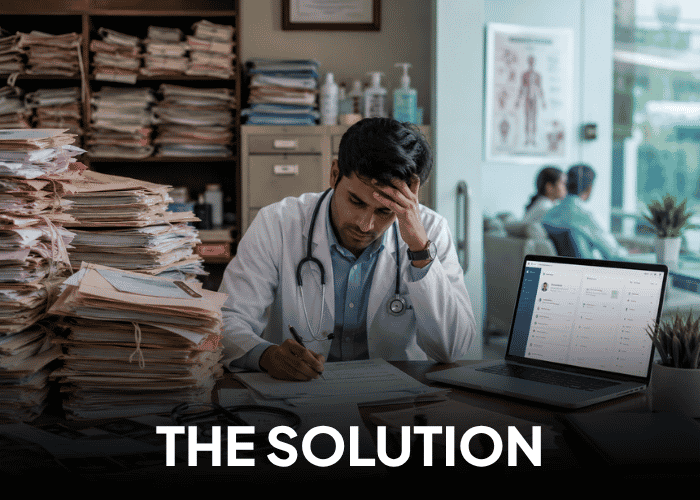
Every doctor in Sri Lanka knows the feeling.
A crowded waiting room.
Stacks of patient documents on the desk.
Handwritten prescriptions.
Lab reports buried inside files.
Patients trying to remember what medication they took six months ago.
And somewhere between consultations, phone calls, and follow-ups, doctors are expected to keep everything organized manually.
For many private practices, paperwork has quietly become one of the biggest obstacles to delivering efficient, modern healthcare.
But why is this still happening in 2026? And more importantly – how do we fix it?
The Reality of Private Practice in Sri Lanka
Most Sri Lankan clinics still rely heavily on:
- Paper patient books
- Handwritten notes
- Physical prescriptions
- WhatsApp messages for follow-ups
- Manual appointment tracking
- Disconnected systems
Even clinics that use software often face another problem: The systems were not built around Sri Lankan clinic workflows.
Doctors end up adapting themselves to the software instead of the software adapting to the clinic.
The result?
- Double documentation
- Lost patient history
- Longer consultation times
- Staff dependency
- Poor continuity of care
- Increased operational stress
The Hidden Cost of Paperwork
Paperwork doesn’t just consume time. It affects clinical quality.
Think about how often these situations happen:
- A patient forgets previous medications
- The doctor has limited visibility into prior treatments.
- A lab report goes missing
- Important clinical context disappears during follow-up visits.
- Different doctors see the same patient
- But each consultation starts from zero.
- Assistants struggle to manage queues manually
- Causing delays and confusion during busy clinic hours.
Over time, these small inefficiencies compound into larger operational and clinical risks.
Doctors Didn’t Become Doctors to Manage Files
Most doctors want to spend more time:
- Listening to patients
- Making clinical decisions
- Delivering quality care
- Building trust
Not:
- Searching through drawers
- Rewriting the same information
- Organizing paper records
- Coordinating manually with staff
Why Existing Systems Often Fail
Many clinical systems available today were designed for:
- Large hospitals
- Foreign healthcare environments
- Billing-heavy workflows
- Generic EMR requirements
Sri Lankan private practice is different. A local clinic needs:
- Fast patient lookup
- Simple workflows
- Minimal clicks
- Quick prescriptions
- Flexible visit management
- Support for real-world clinic operations
Doctors need tools that work with them – not against them.
What a Modern Clinical Workflow Should Look Like
Imagine this instead:
✅ A doctor opens one patient profile and instantly sees:
- Visit history
- Prescriptions
- Diagnoses
- Lab reports
- Shared HealthSync records
✅ Prescriptions are generated digitally in seconds
✅ Visit notes automatically become part of the patient’s long-term record
✅ Staff can manage appointments and queues efficiently
✅ Patients remain connected to their records even after leaving the clinic
This is the direction modern healthcare is moving toward.
Introducing a Sri Lankan-Built Approach
This is exactly why platforms like DocSync and HealthSync are being developed.
The goal is simple: Build connected healthcare tools designed specifically for Sri Lankan workflows.
DocSync focuses on:
- Clinic management
- Patient visits
- Documentation
- Prescriptions
- Operational workflows
HealthSync focuses on:
- Patient-owned health records
- Secure record access
- Long-term health timelines
- Connected care
Together, they aim to reduce fragmentation between clinics and patients while improving continuity of care.
Final Thoughts
Paperwork may still dominate many clinics today.
But the future of healthcare in Sri Lanka does not have to remain paper-heavy.
The transition toward connected digital care has already started.
The question is no longer:
“Should clinics digitize?”
The real question is:
“How do we build systems that actually work for Sri Lankan doctors and patients?”
That is the challenge – and opportunity – ahead.
Interested in the future of connected healthcare in Sri Lanka?
Follow the journey of DocSync and HealthSync as we build tools designed around real clinical workflows, continuity of care, and patient-centered healthcare.