Category: integrations
One patient. Two platforms.
When a doctor creates a patient record in DocSync, they’re not just logging a visit — they’re giving that patient a lifelong, NIC-linked health identity through HealthSync.
In this article
Overview
Two products. One connected health ecosystem.
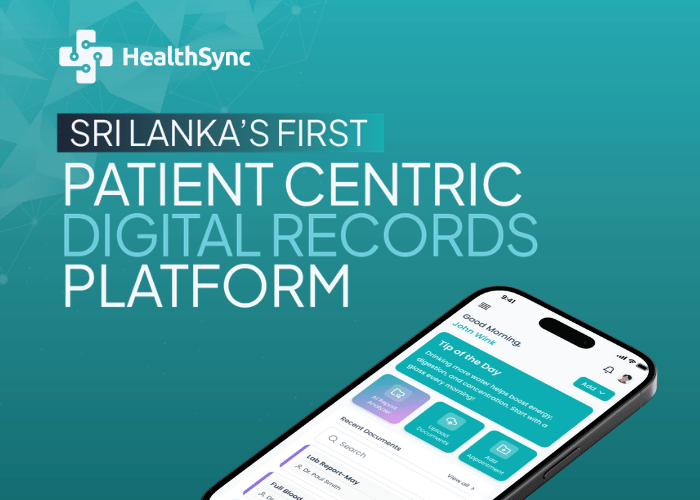
DocSync and HealthSync are built as a connected pair. DocSync is the clinical platform for doctors – handling consultations, prescriptions, records, and clinic operations. HealthSync is the personal health platform for patients – a lifetime health profile they own and control.
The integration between them is seamless and automatic. Every patient registered in DocSync is simultaneously given a HealthSync profile – without any extra steps from the doctor or the patient. The two platforms share a single source of truth, linked by one thing that never changes: the patient’s National Identity Card number.
The Integration
How it works – step by step
The journey begins at the doctor’s desk and ends with a patient who owns their complete health history. Here’s exactly how it flows.
When a patient visits the clinic for the first time, the doctor or receptionist creates a patient record in DocSync – entering their name, date of birth, contact details, and NIC number.
Behind the scenes, DocSync creates a HealthSync profile for that patient – linked to their NIC number. This happens instantly, with no extra steps required from the doctor.
Vitals, diagnosis, doctor notes, conditions, prescriptions, and lab requests are recorded in DocSync during the visit. The doctor’s workflow is unchanged.
After the visit, the patient receives a message – via SMS or WhatsApp – inviting them to claim their HealthSync profile. They verify their identity using their NIC and set a password.
Once claimed, the patient can log in to HealthSync and immediately see their prescriptions, uploaded documents, and visit history. For deeper clinical data – doctor notes, conditions, vitals – a subscription is required.
Identity Layer
The NIC-linked identity – why it matters
The National Identity Card number is the backbone of this entire system. It solves a problem that has plagued Sri Lankan healthcare for decades: duplicate and fragmented patient records.
Without a unique identifier, the same patient can have five different records across five different clinics — all with slightly different names, different histories, and no connection to each other. A doctor at one clinic has no idea what another doctor prescribed last month.
One NIC. One identity. One lifetime health record.
Because every HealthSync profile is anchored to the patient’s NIC number, the system can recognise the same patient across any DocSync-connected clinic in Sri Lanka. Whether they visit a GP in Colombo or a specialist in Kandy – if that clinic uses DocSync – the patient’s record is found, not recreated. There are no duplicates, no lost histories, and no starting from scratch.
This also means the HealthSync profile belongs to the patient – not to any one clinic. Even if a patient changes doctor, moves city, or visits a new specialist, their health identity follows them. It is theirs for life.
“For the first time, a patient in Sri Lanka can have a single, complete, lifelong health record — created automatically the moment they visit a DocSync clinic.”
For Patients
What the patient gets with HealthSync
Once a patient claims their HealthSync profile, they have access to two tiers – a free plan with essential features, and a subscription plan that unlocks the full clinical picture and advanced health tools.
Free plan
Available to all patients – no cost, no credit card
HealthSync Premium
The free plan ensures every patient – regardless of income – can access and organise their basic health records. The premium plan is for patients who want full visibility into their clinical data and the tools to actively manage their health between visits.
Impact
Why this changes everything for Sri Lankan healthcare
The DocSync–HealthSync integration doesn’t just digitise a process. It fundamentally shifts how healthcare records work in Sri Lanka — giving both doctors and patients something they’ve never had before.
The HealthSync profile isn’t created when the patient asks for it. It’s created the moment a doctor cares enough to record their visit properly. That’s the network effect – and it grows with every DocSync clinic.
Every time a doctor in Sri Lanka creates a patient record in DocSync, they are simultaneously giving that patient something far more valuable than a consultation note – they are giving them ownership of their own health story. That is the vision behind this integration, and it begins with a single visit.